Perfume and Cologne Workshop for Beginners – Everything You Need to Know
 December 31, 2025
 8 min read
There’s something almost magical about creating a scent that’s entirely your own. Not a copy from a bottle, not a celebrity brand, but a fragrance blend that is all yours. Studies have shown that our sense of smell is deeply linked to memory and emotion, often more so than any other sense. So imagine crafting one that captures your story.
Whether you’re curious about how to make perfume from scratch, exploring a perfume-making workshop, or simply wondering what happens inside a fragrance lab, this guide walks you through everything you need to know. Let’s take you behind the scenes, from materials and methods to classes, costs, and the creative process that turns ideas into aromas! Here’s a small beginner’s guide to perfume making:
What Is a Perfume and Cologne Workshop?
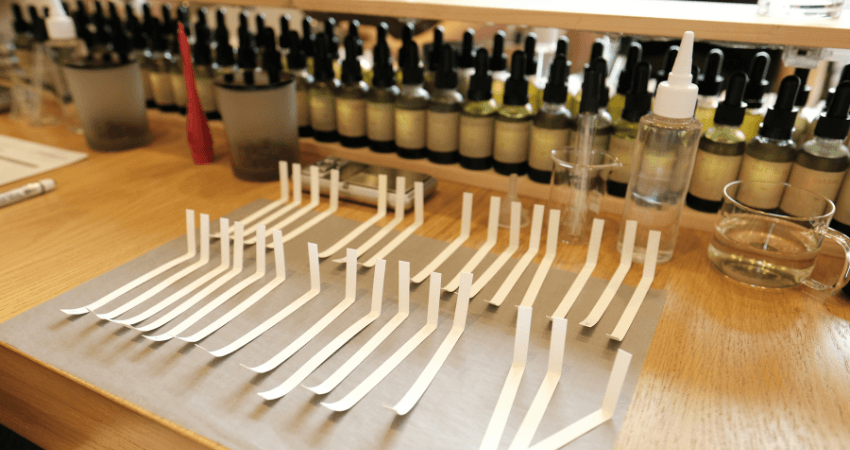
A perfume making workshop is a hands-on learning session where you can learn how fragrances are structured, blended, and balanced. You can learn here the mixing of top, middle, and base notes. So, basically the class is a combination of short theory lessons with practical experience.
Also, you’ll get to smell raw ingredients, understand and learn olfactory families, and then design a signature scent of your own. You can think of it as a chemistry lab and also a creative playground where you can experiment with different ingredients and have fun. It doesn’t matter if you join a DIY perfume and cologne workshop or a certified perfume making course near you, it’s a fully immersive experience that lets you express yourself freely.
What You’ll Learn in a Perfume Workshop
Most beginner perfume making classes start by breaking down the basics of how scents are composed. Here’s what you typically learn:
- Fragrance Families & Notes – You’ll learn about floral, woody, citrus, oriental, sweet, leathery, and fresh scent categories. Also, how top, middle, and base notes work together.
- Blending Techniques – You'll learn how to combine essential oils, fixatives, and solvents in balanced ratios.
- Steps in Making Perfume – From concept to making a unique bottle, there’s a process of selecting ingredients, measuring concentrations, diluting, blending, and aging. All of this makes a unique scent that tells your story.
- Perfume Pyramid – Here, you’ll learn how scent evolves over time, from initial spray to long-lasting base notes.
- Safety & Storage – Handling oils safely and storing your perfume properly to maintain its scent and overall quality.
- Hands-On Practice – You’ll mix ingredients of your choice and get to take with you your very first fragrance creation.
A lot of perfume courses also include modules on branding, naming your scent, and understanding the difference between perfume, eau de parfum, eau de toilette, and cologne.
Materials Needed for Perfume Making
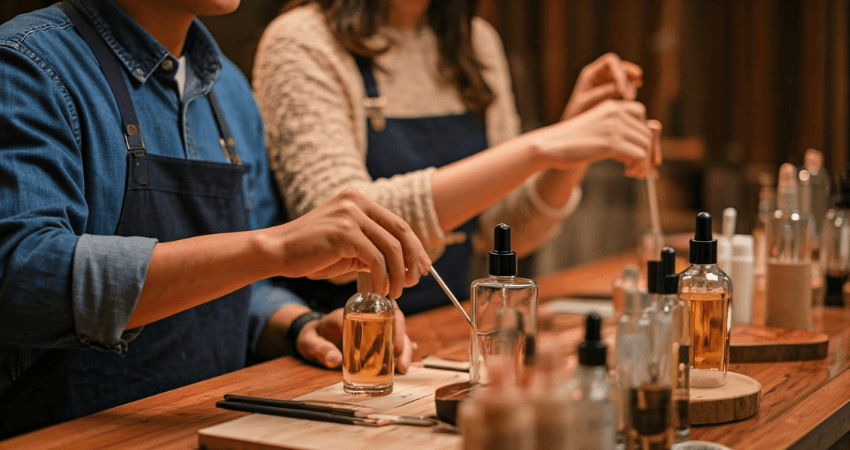
If you want to learn how to make perfume from scratch, you’ll need a few essential tools and materials:
- Essential oils or fragrance oils (the scent components)
- Ethanol or perfumer’s alcohol (the base)
- Distilled water (to dilute the mixture)
- Fixatives like benzoin, musk, or ambergris substitutes (to make scents last longer)
- Glass droppers and pipettes
- Measuring cylinders and beakers
- Dark glass bottles for storage (light affects the formula)
- Blotter strips for testing
While professional fragrance making classes provide these materials on site, having your own starter kit can be great for experimenting at home after the course.
Steps in Making Perfume (Simplified for Beginners)
If you’re trying how to make cologne at home, here’s a beginner-friendly process that most workshops follow:
- Choose a Scent Theme – Floral, citrus, spicy, or woody.
- Select 3–5 Key Oils – A mix of top, middle, and base notes.
- Blend the Oils – Add drops carefully, recording ratios as you go.
- Add Alcohol Base – Usually 70–90% of the total mix.
- Rest the Blend – Let it age in a cool, dark place for at least 48 hours (some wait weeks).
- Filter & Bottle – Use coffee filters to remove residue and pour into your glass bottle.
Fragrance making workshops guide you through these steps with professional supervision, helping you refine your blend without overpowering notes.
Perfume Workshop Cost
The perfume workshop cost depends on the duration and level of expertise. Here’s a general breakdown:
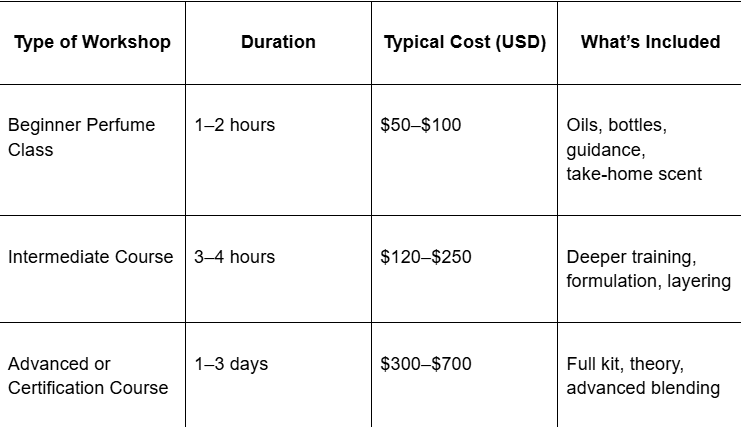
Some studios even offer private or group sessions for events, bridal parties, or corporate workshops.
Perfume Making Classes Near You
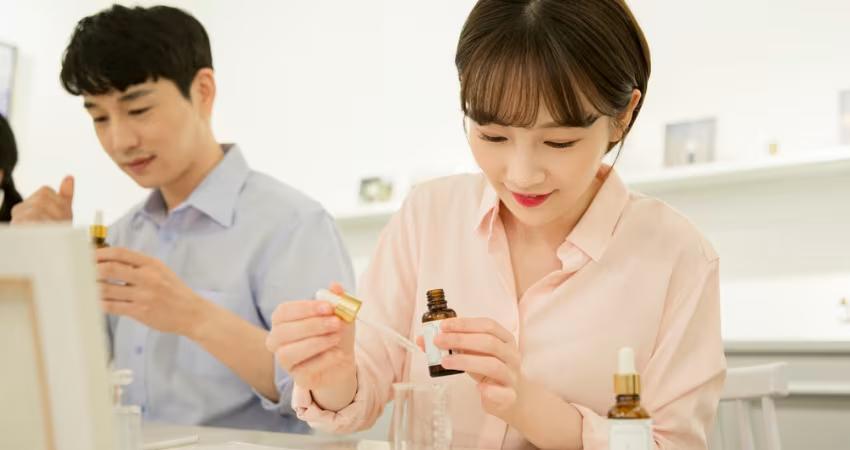
Searching for perfume making classes near me or cologne workshop for beginners? Many major cities like New York, Toronto, London, and Singapore, etc host professional classes year-round. You can also find online perfume making courses that ship kits to your door and guide you virtually.
When choosing one, look for certified instructors that have industry experience. Also, classes that have access to high-quality ingredients including essential oils and other materials are the ones you should look for. Look for small class sizes for a better understanding of the process and getting personalized feedback. Lastly, you want a class where you’re allowed to take your craft home with you.
You can search online for a perfume making course near me, if you cannot travel long distances. If you’re serious about building this into a side hobby or career, opt for a certified perfume making course that covers advanced topics like scent formulation, ingredient sourcing, and fragrance chemistry.
Why Take a Perfume or Cologne Workshop?
- Creative Expression: Craft a scent that mirrors your personality.
- Personalized Learning: Discover your scent preferences; floral, musky, citrusy, or fresh.
- Practical Skill: Gain knowledge to make perfume or cologne at home safely.
- Sustainable Choice: Avoid synthetic-heavy commercial perfumes.
- Gifting Idea: Handmade fragrances make elegant, meaningful gifts.
Beyond fun, perfume workshops teach patience, experimentation, and sensory awareness—skills that transfer to cooking, art, and mindfulness.
How to Make Cologne at Home (Beginner’s Example)
Want to start small? Try this simple formula you’ll often make in a beginner cologne making class:
Ingredients:
- 2 tbsp vodka (perfumers’ alcohol)
- 2 tbsp distilled water
- 6 drops lemon essential oil
- 4 drops cedarwood essential oil
- 3 drops lavender essential oil
- 2 drops vetiver essential oil
Instructions:
- Mix all oils in a dark glass bottle.
- Add vodka and shake gently.
- Let sit for 48–72 hours in a cool, dark space.
- Add distilled water and shake again.
- Rest for another 24 hours before using.
Congratulations, you’ve just made your first cologne!
Tips for Success in Your First Perfume Class
- Go with an open nose! Avoid wearing strong scents that day.
- Take notes on what you smell and like. It's all part of your scent journey!
- Be patient. Good perfumes need time to blend and mature.
- Ask questions. Understanding proportions and evaporation rates is key.
- Keep your blends labeled—nothing worse than forgetting your winning formula!
FAQs
Q1: What’s the difference between perfume and cologne?
Perfume has a higher concentration of fragrance oils (15–30%) and lasts longer, while cologne has 2–5% concentration and feels lighter—great for everyday wear.
Q2: Can I take a perfume making class online?
Yes! Many studios offer live or recorded classes with mailed kits. You’ll get all materials and guided steps from professionals. Just search for perfume classes near me and you'll get different available classes online.
Q3: What are the materials needed for perfume making?
Essential oils, alcohol base, distilled water, fixatives, pipettes, and dark glass bottles. Workshops often provide these.
Q4: How long does it take to make a perfume?
A basic blend can be done in 2–3 hours, but professional perfumes often age for several weeks to achieve balance.
Q5: Are perfume workshops suitable for beginners?
Absolutely. Classes are designed for all levels, guiding you step-by-step through blending, ratios, and scent layering.
Q6: How much does a perfume workshop cost?
Beginner workshops range between $50–$100, depending on location and materials. Certification courses are higher.
Q7: What do you learn in a perfume making class?
You learn about how fragrances are structured and layered. Plus you learn about how top, middle, and base notes work.
Q8: Are perfume workshops worth it?
Definitely, if you’re passionate about perfumes, consider joining this workshop for a unique experience.
Q9: What are the four main fragrances used for making perfumes?
It all depends on your preference and how you want to make your perfume. But the top four fragrances commonly used are woody, fresh, oriental, and floral.
About Author
Ammara Younas
Travel WriterAs a travel blogger, Ammara revels in the art of discovery, seeking out hidden gems and capturing the essence of places that often slip past the notice of others. Her passion for writing drives her to explore and document these overlooked treasures, partnering with See Sight Tours to share her adventures with the world. Through her travel guides, she aims to inspire readers to delve deeper into their journeys, uncovering the extraordinary in the seemingly ordinary and challenging themselves to explore beyond the surface.



 Discord
 Instagram
 Facebook


